
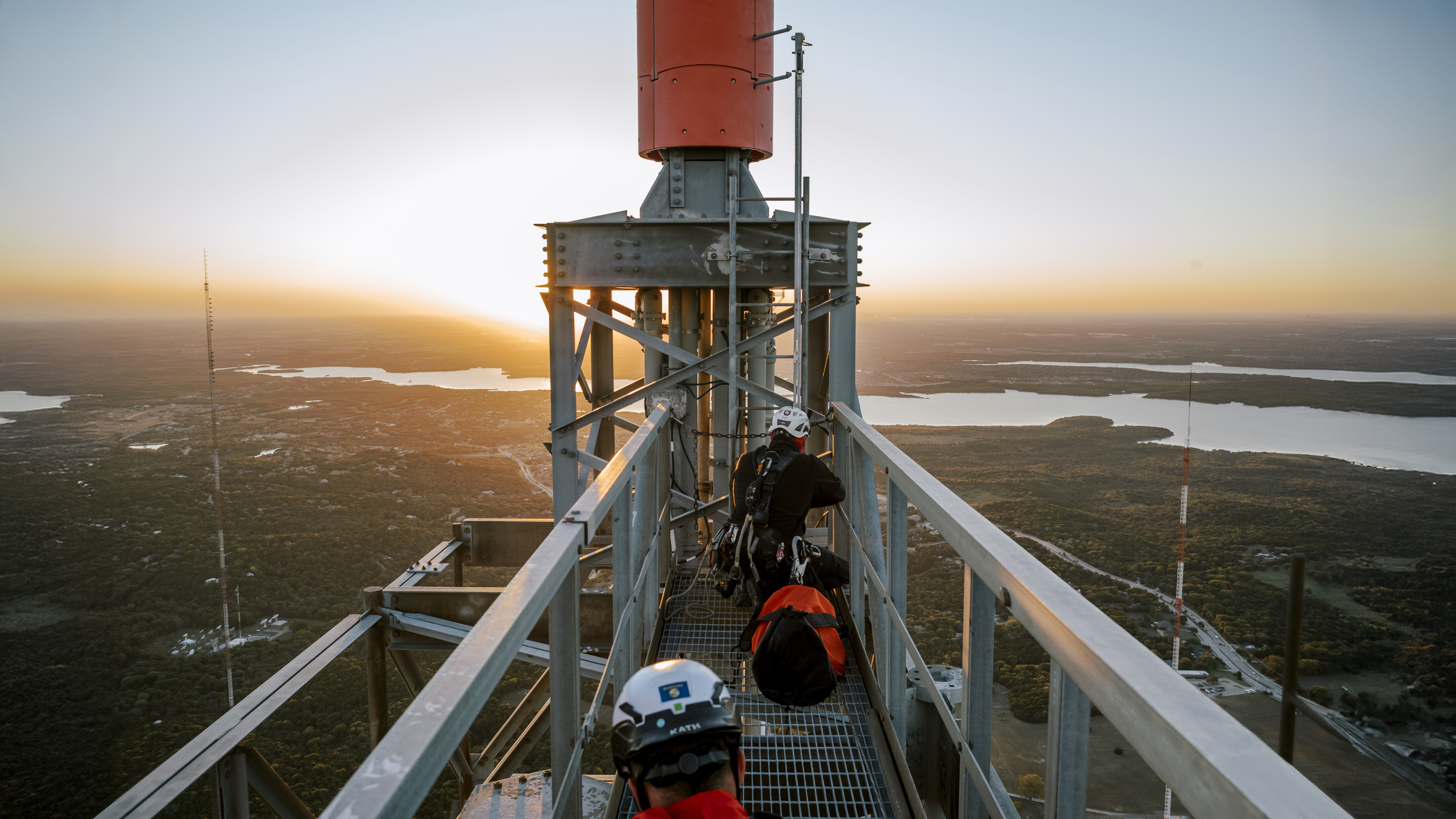
Gravitec Systems Inc. was lucky enough to have the opportunity to replace the ladder safety system on a 1,400-foot broadcast tower in Texas for a long-time client. This project began when we were asked to inspect the tower’s existing safety systems to ensure it met OSHA and ANSI Z359 standards. Although we’d worked on other towers for this client, this was our first project at this particular location.
The Tower: Extreme Heights, Extreme Challenges
The tower itself stands at 1,400 feet and is divided into four separate ladder sections. Workers take an elevator up to about 1,300 feet, then climb a 30-foot ladder followed by a final 10-foot climb to reach the antenna. During our inspection, we found significant corrosion and wear on the ladder safety systems. The systems were tagged out and it was recommended that a complete replacement of both internal and external systems be completed.
Overcoming Rigging and Weather Challenges
The project presented several obstacles, starting with weather. Texas is known for unpredictable conditions, and we faced days with up to 60 mph wind gusts, making the hauling process difficult and raising safety concerns. On calmer days, the wind was still a factor, impacting the logistics of the installation. The high winds made it even more critical that we had solid rigging points.
The cable itself weighed over 500 pounds, and getting everything up the tower was not an easy task. Trying to keep the cable guided down the tower while disassembling the old ladder safety system proved to be a struggle. Multiple directional and guide points were used to ensure the cable was installed safely. Additionally, the elevator cables and components were exposed, while working 1,300 feet in the air, meaning that any dropped items could result in damage to the tower or risk of injury to workers.
Given the tower’s height, the cable tended to vibrate in the wind, which could damage the system overtime. To prevent this, we strategically attached intermediate guides that minimized the cable’s movement and resonance.
Communication between the team on the tower was critical, and we relied on radios and cell phones to stay in constant contact, ensuring safety and coordination throughout the process.
Safety First: Rescue Planning and Team Coordination
Safety isn’t just about fall protection—it involves having a solid rescue plan as well. Multiple rescue scenarios were anticipated where workers could fall, including remote areas of the tower. If the elevator was nearby, we could quickly use it for rescue, but if it wasn’t, we had a backup plan to lower workers down using specialty rescue kits.
With the work happening at extreme heights, coordination among the team was crucial. The elevator ride to the top took about 25 minutes each way, meaning it could take almost an hour and a half to get the whole crew to the worksite. While this was time-consuming, it was far more efficient than having workers climb the 1,300-foot ladder with Y-lanyards, which would have taken much longer.
Engineering Solutions for a Safer System
One of the most significant challenges was the 1,300-foot internal ladder. Ladder safety systems are typically designed for one or two users at a time, but with such a long ladder, multiple workers needed to ascend at once. To address this, we designed custom reinforcement that mounted securely to the structure (not the ladder rungs) to safely bear the additional load and allow for simultaneous climbing.
The Result: A Compliant, Safer Tower
By the end of the project, the old, deteriorating ladder safety systems were completely replaced with new, fully compliant systems. This upgrade not only ensured that the tower met OSHA and ANSI standards, but it also reinforced the tower owner’s commitment to workplace safety. Even with challenges like weather, rigging, and safety, we were able to finish the project on time thanks to good planning and strong teamwork.
Gravitec was thankful for the opportunity to work on this project. It helped us build an even stronger relationship with the client and gave us a chance to showcase our expertise in tackling complex fall protection challenges.